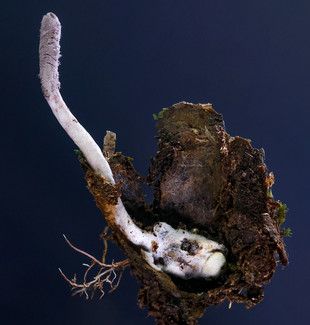
More than two million fungal species are still unknown to science, although some estimates suggest the true number could be as high as ten million. Many of these species may contain compounds or traits that could one day be used in medicine, food production, or to protect crops against diseases and pests. At the same time, researchers believe that up to three-quarters of these unknown species may already be at risk of extinction before they are even discovered.
This is highlighted in the newly published State of the World's Plants and Fungi report from the Royal Botanic Gardens, Kew, which points to the need to accelerate efforts to discover and describe Earth’s unknown biodiversity.
Among the research contributions featured in the report is a study led by João P. M. de Araújo, Curator of Mycology at Natural History Museum Denmark, demonstrating how new technological approaches can make the process of finding and describing new species faster and more efficient.
Read more about the museum’s other contributions to the State of the World's Plants and Fungi report.
Taking the Laboratory into the Field
In the study, the researchers used a so-called taxogenomic approach, combining traditional species description with DNA analyses carried out directly in the field. Using portable equipment, researchers can analyse genetic material during fieldwork rather than sending samples to laboratories for later analysis. This makes it possible to identify and describe new species more quickly.
The method makes it possible to gather far more information at the locations where potentially new species are discovered, including in areas where access to laboratory facilities may be limited.
– Researchers estimate that, at the current pace, it could take up to 1,000 years to describe all of the world’s fungal species. If we are not to lose the opportunity to study some of them, we need to find new ways to accelerate the process. Portable DNA equipment allows us to take the laboratory into the field and obtain crucial genetic data right where species are discovered. This can make the work of describing new species both much faster and more accurate, explains João Araújo.
According to the State of the World's Plants and Fungi report, around 4,000 new fungal species are described every year. This is far more than in the past, but still only a small fraction of the enormous number of fungal species that researchers believe exist.