New Book Provides the Most Comprehensive Overview Yet of Denmark’s Marine Fish
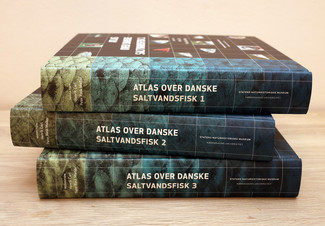
Title: Atlas over danske Saltvandsfisk
Editors: Henrik Carl & Peter Rask Møller
Format: Hardcover, three volumes
Number of pages: 2,176
ISBN: 987-87-87519-99-1
Recommended retail price: DKK 1,000
Publisher: Natural History Museum Denmark
Atlas over danske saltvandsfisk was published with support from the Aage V. Jensen Naturfond and VELUX FONDEN.
Weighing 9.5 kg, taking 16 years to complete and spanning more than 2,000 pages, Atlas over danske saltvandsfisk is not only the most comprehensive work on Denmark’s marine fish ever published – it is also unique in an international context. No other work anywhere in the world provides the same level of detail and comprehensive mapping of a country’s marine fish species.
– The marine environment is in crisis, and nature is changing at a surprisingly rapid pace. This trend appears to be accelerating as the climate changes. To assess what is changing – and how quickly – we need to know where we started. With Atlas over danske saltvandsfisk, we now have, for the first time, a solid, shared baseline for all species, says Henrik Carl, fish specialist at Natural History Museum Denmark and editor of the book.
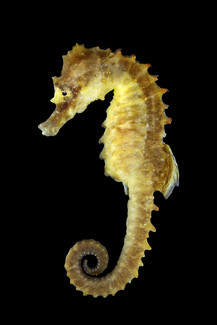
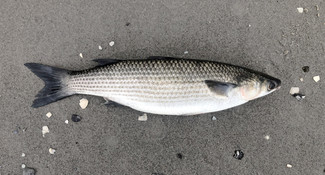
The three-volume work covers familiar fish such as cod, which is under pressure these days, as well as species that are less well known but are becoming increasingly widespread. These include the striped red mullet, thinlip mullet and small-spotted catshark. The atlas also features more surprising visitors to Danish waters, such as ocean sunfish, triggerfish and seahorses.
The Fish Atlas contains updated distribution maps for all marine fish species native to Danish waters, as well as the many fish species that have been introduced to Denmark from elsewhere in the world with human assistance.
When Knowledge Becomes the Basis for Decisions About the Marine Environment
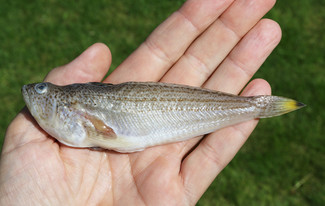
The atlas documents the distribution of a total of 214 fish species and is richly illustrated with photographs of the fish, their distinguishing characteristics and their habitats.
– The knowledge compiled in the atlas is already providing the basis for the latest Red List assessment of Danish marine fish, which evaluates how threatened individual species are. This shows how important it is to have a solid and up-to-date data foundation, says Peter Rask Møller, co-editor of the book and curator of the fish collection at Natural History Museum Denmark.
The work also includes chapters providing an overview of the seas around Denmark, mapping methods, the migration of fish into Danish waters after the Ice Age and fish diseases. Together, these make the atlas an important resource for research, education and the authorities’ work to protect and manage the marine environment.
The publication is a collaboration between researchers from Natural History Museum Denmark, the University of Copenhagen and DTU Aqua, together with other institutions and thousands of volunteers. The work was published with support from the Aage V. Jensen Nature Foundation and the VELUX FOUNDATION, which has a particular focus on strengthening healthy marine environments that can withstand climate change.
– The VELUX FOUNDATION contributes to a healthy and balanced marine environment, and the atlas provides a solid academic foundation for discussions and decisions about the marine environment. In addition, many of the authors are experienced and highly skilled senior researchers with great potential, whom the foundation supports, among other things, through book publications, while the foundation also supports a number of activities that benefit individuals and communities, says Ane Hendriksen, Director of the VELUX FOUNDATION.
A Snapshot of a Changing Sea
The publication does not mark the end of efforts to map Denmark’s fish, the researchers emphasise. Quite the opposite. The atlas captures a moment in the development of the marine environment and makes it possible to measure in the future what is changing, disappearing or becoming more widespread in Danish waters.
– We know that, on average, around one new fish species is discovered in Danish waters every year. At least 50 non-native fish species have now been recorded, and several of them pose challenges to natural ecosystems. The atlas should therefore be seen as a snapshot and a tool for understanding and monitoring the changes to come, says Peter Rask Møller.
This also means that the work of mapping Denmark’s marine fish will continue. The publication is therefore not an end point, but rather a status report.
Anglers and Nature Enthusiasts Have Mapped the Fish of the Sea
The project began in 2009 as a research collaboration between Natural History Museum Denmark and DTU Aqua, but a significant part of the data was collected with the help of volunteer anglers and nature enthusiasts from across the country. Throughout the project, researchers, together with other institutions, volunteer anglers and nature enthusiasts from across Denmark, have collected information about the distribution of fish and observations of both current and historical occurrences of fish in Danish waters. This extensive collective effort has now been compiled and made available in Atlas over danske saltvandsfisk.