Two New International Scientific Curators Strengthen the Museum’s Research and Collections in Fossils and Mineralogy
– With Brandon Peecook and Vincent van Hinsberg, we are welcoming two strong international research profiles and excellent new colleagues whose expertise is exceptionally well matched to the museum’s extensive collections. Their appointments strengthen the museum’s collections-based research as a foundation for generating new knowledge and communicating about nature and the history of the Earth, says Nina Rønsted, Director of Natural History Museum Denmark.
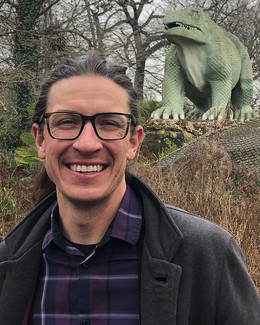
Brandon Peecook
Brandon Peecook joined the museum on 1 June 2026 and will, among other things, study the transition from the Permian to the Triassic – a crucial period in Earth’s history when life on the planet changed dramatically following the largest mass extinction in its history.
Peecook is very much looking forward to this work and sees great potential in the museum’s collections:
– There is an enormous amount of material in the museum’s collections, and many of the fossils still contain information that we have yet to investigate. This offers great potential for new discoveries in the material already held by the museum, says Brandon Peecook.
Peecook joins the museum from a curatorial position in palaeontology at the Idaho Museum of Natural History and holds a PhD in Biology from the University of Washington in Seattle. His research has focused, among other things, on the evolution of marine reptiles, turtles and early dinosaurs during the Permian and Triassic periods around 250 million years ago.
Brandon Peecook looks forward to collaborating with researchers and collectors in Denmark and internationally, including on fossils from Møns Klint, Mors, Fur and Bornholm.
– I’m excited to contribute both to research and to the museum’s public engagement, and to become an active part of the palaeontological community in Denmark and across Europe, he says.
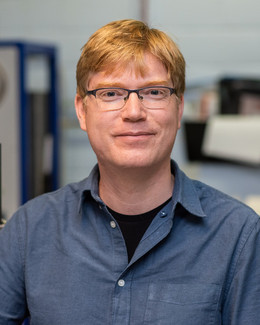
Vincent van Hinsberg
Vincent van Hinsberg will join the museum on 1 September 2026 and will, among other things, investigate how the composition and structure of minerals can be used to understand the evolution of the Earth, the influence of geological processes on the climate, and the formation of critical raw materials needed for the green transition.
Vincent van Hinsberg joins the museum from a research position at McGill University in Canada and holds a PhD from the University of Bristol in the UK. Throughout his career, he has worked with both natural and synthetic minerals. His research focuses on improving our ability to read the information contained in minerals about Earth’s history, geological processes and the raw materials needed for future technologies.
– Minerals contain enormous amounts of information about how the Earth works. If we can read that information correctly, we can gain a better understanding both of the Earth’s evolution and of how to find and utilise the materials needed for future technologies, says Vincent van Hinsberg.
The museum’s extensive mineral collection provides new opportunities for his research into geological processes, critical raw materials and advanced materials.
– My research requires access to a very large and diverse range of minerals – particularly rare minerals that can almost only be found in major museum collections. The museum’s collections are therefore absolutely central to what I hope to achieve through my research, he says.
Vincent van Hinsberg has collaborated for many years with researchers from both the University of Copenhagen and the Natural History Museum Denmark, as well as the Geological Survey of Denmark and Greenland (GEUS), including on research into minerals from Greenland. He therefore looks forward to becoming part of the Danish research community and to working more closely with the collections and the research environments surrounding them.